Google Antigravity: What Vibecoding Means for Software Builders
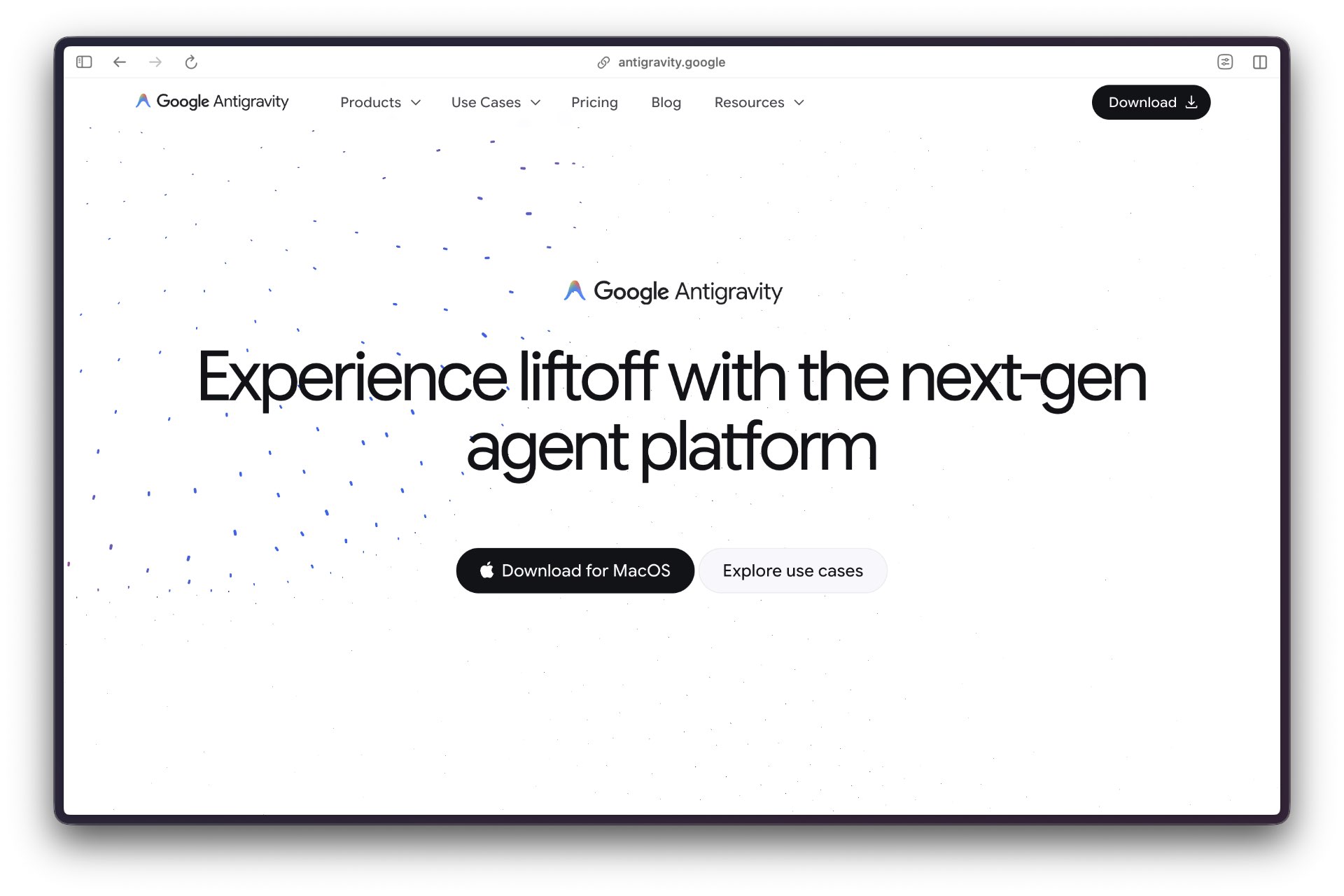
Vibecoding — building software by describing intent rather than writing code line by line — gained a name and a platform when Google launched Google Antigravity in November 2025. The term captures something real: a shift in how developers relate to implementation. “Antigravity” is both a product name and a useful metaphor for what the approach promises — lifting the weight of routine coding decisions so developers can focus on what they want to build, not how to build it.
Google Antigravity matters because it pushes vibecoding closer to a mainstream development surface. The question is not whether natural-language coding feels impressive. The question is whether the environment gives operators enough control to trust what the model changes.
That is where the field test belongs: between speed and accountability.
Overview
💡 What Makes This Guide Different
Most AI tool documentation focuses on ideal scenarios. This guide is closer to an operator’s logbook: what installed cleanly, what broke, what got expensive, and what created real risk.
Google Antigravity launched in November 2025 as an agentic development platform — not just an AI coding assistant, but an environment where developers can spawn, orchestrate, and observe multiple agents working asynchronously across different workspaces. The platform pairs a familiar AI-powered IDE with a Manager Surface for multi-agent workflows, available at no cost for individuals in public preview.
Google AI Studio expanded the vibecoding experience in March 2026, adding the Antigravity coding agent as its backend to turn prompts into production-ready applications. The integration supports Firebase backends for databases and authentication, modern web frameworks (React, Angular, Next.js), and external API connections through a Secrets Manager.
By I/O 2026, Google launched Antigravity 2.0 — a separate application designed specifically for vibecoding without a terminal or raw code editor. The original Antigravity IDE remains available for developers who want VS Code-style control. The two products now serve distinct user modes: Antigravity 2.0 for pure vibecoding, Antigravity IDE for engineers who want to steer the agent with direct code access.
What Is Vibecoding
Vibecoding describes an engineering mode centered on reducing friction between intent and implementation. Developers describe what they want; AI systems handle the implementation draft. The approach isn’t new — code generation tools have existed for years — but Antigravity operationalizes it at the full-stack level: multiplayer experiences, database integration, authentication flows, and external service connections can all be generated from a single conversational session.
Google AI Studio’s build mode demonstrates this in practice. The agent proactively detects when an app needs a database or login, provisions Firebase services after user approval, installs relevant libraries automatically, and maintains project context across sessions. The developer’s job becomes steering and reviewing rather than scaffolding.
One developer documented refactoring their blog’s Weekly Macro Report feature in under an hour through conversational iteration rather than manual taxonomy configuration — a fair benchmark for what the approach does well: rapid prototyping and incremental improvement on clearly specified problems.
The tradeoffs are equally documented. As one senior engineer observed, vibecoding “feels like delegating the first draft of everything” — speed is genuine, but vague requirements compound into expensive revision cycles. Another practitioner noted that the initial excitement of vibecoding gives way to harder questions about precision, maintainability, and architectural coherence once a project grows beyond the prototype phase.
Core Concepts
Vibecoding — Engineering that prioritizes intent-first interaction, letting developers describe goals and iterate toward implementation rather than writing code sequentially.
Antigravity — Google’s agentic development platform, launched November 2025. Available as Antigravity 2.0 (vibecoding-first, no raw editor) and Antigravity IDE (VS Code fork with full multi-agent capabilities).
Manager Surface — The Antigravity interface for spawning and observing multiple agents working asynchronously. Separate from the Editor View, which provides hands-on AI-assisted coding.
Zero-UI — Interfaces that anticipate user needs and minimize explicit interaction. Autocomplete, Smart Compose, and proactive agent actions are operational examples of this principle.
Cognitive Load Reduction — The design goal underlying vibecoding: minimizing mental overhead by hiding implementation decisions that don’t require human judgment.
Historical Context
Google’s design philosophy moved steadily toward abstraction over two decades. Gmail (2004) and early Google products exposed visible complexity. Material Design (2014) shifted emphasis toward declarative thinking — describing what interfaces should achieve rather than how to build them. Flutter (2017) extended this to code structure itself.
By the early 2020s, Google Search had stripped away most visible machinery. The search box became a near-conversational endpoint as users expressed intent in natural language and Google’s systems interpreted ambiguity rather than demanding precision.
Google Antigravity represents the logical endpoint of this trajectory: a development environment that operates as an agent harness rather than a tool. The platform supports Gemini 3 Pro by default, with full support for Anthropic’s Claude Sonnet 4.5 and OpenAI’s GPT models — model-agnostic by design, so the platform’s value isn’t tied to a single AI provider.
Antigravity 2.0’s release at I/O 2026 formalized the product split: one product for developers who want to write code with AI assistance, another for those who want to describe outcomes and let agents handle implementation entirely.
The Platform in Practice
| Capability | Surface | Notes |
|---|---|---|
| Multi-agent orchestration | Antigravity IDE / Manager Surface | Agents plan, execute, and verify tasks across editor, terminal, and browser |
| Full-stack app generation | Google AI Studio Build Mode | React, Angular, Next.js; Firebase integration; deploys to Antigravity |
| No-code vibecoding | Antigravity 2.0 | No terminal or raw editor; designed for high-level prompt-to-app workflows |
| Enterprise codebase integration | Antigravity IDE | Agent understands existing project structure; enterprise-aware suggestions |
| Mobile development | Google AI Studio | Native Android support added at I/O 2026; capture idea on phone, prototype at desk |
| Managed Agents (API) | Gemini API / Interactions API | Single API call spins up an agent with tool use and code execution in isolated Linux environment |
Techniques and Practices
Predictive prefetch loads resources before explicit requests by modeling user behavior patterns. In vibecoding contexts, this means the agent pre-stages likely next steps based on project structure and conversation history rather than waiting for the next prompt.
Intelligent defaults eliminate setup friction by inferring stack requirements from intent descriptions. Google AI Studio’s build mode automatically configures Firebase backends, installs relevant libraries, and scaffolds project structures — defaulting to production-ready patterns while preserving override options.
Context-aware suggestions examine existing codebases and recommend patterns consistent with established conventions. Antigravity’s coding agent adjusts recommendation strategy based on whether it’s working with an enterprise repository or a greenfield project — compliance-aware recommendations in regulated contexts, broader exploration in experimental ones.
Progressive disclosure maintains surface simplicity while preserving depth. Developers completing features in under an hour succeed partly because routine decisions stay hidden while genuinely ambiguous choices surface for human judgment.
Graceful degradation keeps functionality available under varying conditions. The underlying infrastructure manages consistency transparently, with users experiencing continuous service while the system handles distributed complexity.
Trade-offs and Tensions
Privacy is the first serious concern. Tools like Google Antigravity process code, prompts, and project context to generate suggestions. For enterprise developers working with proprietary codebases, the data flow questions are real — what leaves the development environment, how it’s retained, and whether AI providers’ training practices align with the organization’s data governance requirements.
Over-automation creates a specific failure mode: speed that inverts. As one senior engineer documented, “vague requirements get expensive” in vibecoding environments. AI agents generate substantial code quickly. If that code misses the intent, correction cycles consume more time than traditional development would have required.
Loss of granular control is a structural tension, not a product defect. Developers who understand every line of their codebase find AI-generated implementations architecturally opaque. The “vibe” approach encourages high-level thinking but can obscure performance, security, and maintainability decisions that experienced engineers would have made deliberately.
Debugging escalates in difficulty when AI-authored systems fail. As one analysis noted, the productive early phase of vibecoding can conceal fragility. Without understanding generated code’s logic, simple bugs become investigations through abstraction layers the developer didn’t write.
Measurement and Success Criteria
Measuring vibecoding effectiveness requires moving beyond anecdotal velocity to quantifiable metrics across four dimensions:
Time-to-intent measures how quickly a developer moves from articulated goal to working implementation. Early reports suggest feature upgrades completed in under an hour compared to traditional multi-session workflows — though this figure holds mainly for well-scoped, greenfield work.
Error recovery rate tracks how effectively the system handles ambiguous or incomplete prompts, adapting to clarification rather than producing unusable output. This matters because vague requirements create expensive revision cycles.
User-reported effortlessness captures the subjective experience of delegating complexity — distinguishing cases where the tool reduces cognitive load from cases where it relocates the burden to prompt engineering.
Abandonment reduction measures how often developers complete intended features rather than reverting to manual approaches when AI assistance proves insufficient.
These align with Google’s HEART framework: Happiness (effortlessness scores), Engagement (AI-assisted workflow adoption), Adoption (breadth of use cases from hobbyist to enterprise), Retention (whether early enthusiasm translates to sustained use), and Task Success (time-to-intent and error recovery rates).
Vibecoding Metrics Reference
| Metric | Type | Description |
|---|---|---|
| time_to_intent_ms | integer | Duration from user prompt to working implementation |
| zero_click_rate | float | Percentage of goals achieved without additional explicit input |
| prediction_accuracy | float | Rate at which agent suggestions match actual developer intent |
| override_rate | float | Frequency developers reject or manually correct AI decisions |
| perceived_effort_score | integer (1–7) | User-reported difficulty; lower is better |
Anti-Patterns
Over-prediction occurs when the agent auto-completes actions before developers fully articulate intent — or rearranges code based on inferred preferences without confirmation. The line between “anticipatory” and “presumptuous” is hard to calibrate through prompts alone. As one practitioner noted, delegating design decisions to AI agents is only fast when requirements are sharp.
The minimalism trap follows a related pattern: removing explicit UI or configuration elements in pursuit of intuitive design often leaves developers confused about available options. Discoverability suffers when the system assumes a shared mental model.
Hidden complexity becomes critical when AI-generated code works initially but fails under load or edge cases. AI-generated architectures often lack the internal documentation or structural clarity that manually written code provides for troubleshooting. Complex error handling and data validation may exist but remain opaque to developers who didn’t write the original implementation.
Accessibility regression is among the most serious failure modes. Implicit interactions — context-dependent behaviors, gesture-based controls — frequently omit keyboard navigation and screen reader compatibility unless explicitly specified. These issues rarely surface in prompt-driven development without deliberate testing.
Case Study: Google Search Autocomplete
Search autocomplete illustrates vibecoding principles in production infrastructure. When a user types “weather in” into Google’s search box, the system delivers completions in under 100 milliseconds. This sub-second responsiveness creates the operational impression of intent-reading before full articulation — the autocomplete principle applied at scale.
The 100-millisecond latency budget governs every design decision. Google’s autocomplete infrastructure distributes queries across geographically proximate servers, caches popular prefix patterns, and precomputes ranking scores for high-traffic suggestions. Each keystroke triggers parallel execution: lexical matching, real-time popularity scoring weighted by recency and geographic relevance, and personalization layers that incorporate search history.
Ranking signals combine multiple dimensions: popularity across all users, click-through rates that validate which suggestions lead to satisfying sessions, and query completion rates that measure whether users accept recommendations or continue typing. Multilingual support requires character-aware tokenization that handles scripts without word boundaries. Abuse prevention filters block offensive terms and manipulation attempts.
The measurable impact: autocomplete reduces typing by approximately 25% while maintaining the perception of instantaneous response. This conversion of partial input into actionable options — fast enough to feel like anticipation, sophisticated enough to handle linguistic diversity — embodies the vibecoding proposition: ambiguous signals resolved into useful output through intelligent, adaptive systems.
Implementation Checklist
Teams deploying vibecoding workflows need concrete measurement and safeguard practices. Speed is not a substitute for operational discipline.
Establish latency budgets. Define acceptable response times for different interaction types — code generation, refactoring, deployment actions — and instrument the toolchain to track compliance. When latency exceeds thresholds, developers lose flow state and productivity gains evaporate.
Instrument prediction accuracy. Track how often AI-generated code requires manual correction, which suggestions developers accept or reject, and how frequently agent interpretations align with actual intent. Maintaining logs of prompt-to-output pairs enables retrospective analysis: which request types yield reliable results, and where does the agent consistently miss context. As one engineer noted, “vague requirements get expensive” — metrics make that cost visible.
Run stranger testing for maintainability. Have developers unfamiliar with a vibecoded codebase attempt to understand, modify, or extend it without consulting original prompts. If AI-generated code proves opaque to human maintainers, technical debt compounds quickly. This practice surfaces whether the output is maintainable or merely working.
Implement undo and override mechanisms. Every predictive feature needs a clear path to revert AI decisions or specify alternatives explicitly. Version history integration and “explain this change” annotations keep developers in control when automation misinterprets intent.
Privacy-review predictive features. Before deploying tools that process proprietary codebases, conduct privacy impact assessments. Determine what information leaves the development environment and whether data handling practices align with the organization’s security requirements. Google Antigravity describes itself as built for user trust, but teams should independently verify that framing against their own compliance requirements.
A/B test against explicit UI baselines. For features introduced via vibecoding, deploy controlled experiments comparing the AI-assisted implementation against a traditionally developed alternative. Measure completion rates, error frequencies, and developer satisfaction. This validation ensures speed doesn’t trade off against quality.
Operator Verdict
Google Antigravity is a real product with a clear use case: accelerating the development of well-scoped applications by replacing boilerplate decisions with conversational iteration. The platform works best for greenfield projects, rapid prototyping, and feature scaffolding where requirements are clear enough that the agent can generate a useful first draft without multiple correction cycles.
The value degrades as requirements become ambiguous, codebases become complex, or debugging becomes necessary. Antigravity 2.0 sharpens the vibecoding experience for users who don’t want to touch code directly; Antigravity IDE maintains full developer control for those who do. The split is honest: Google is no longer trying to serve both modes with a single interface.
The unresolved tension is enterprise adoption. Privacy questions around code being processed by cloud AI systems, debugging opacity for complex generated architectures, and the maintenance overhead of AI-authored code are real constraints — not marketing caveats. Organizations treating vibecoding as an operating model change rather than a productivity tool will get more out of it than those expecting it to be drop-in faster coding.
For teams with clear requirements, strong measurement practices, and tolerance for AI-authored code in their codebase, Antigravity compresses time-to-prototype meaningfully. For teams without those conditions, the speed advantage inverts into a correction cost.