Kilo Code and KiloClaw: Open-Source Alternatives for AI Coding Agents
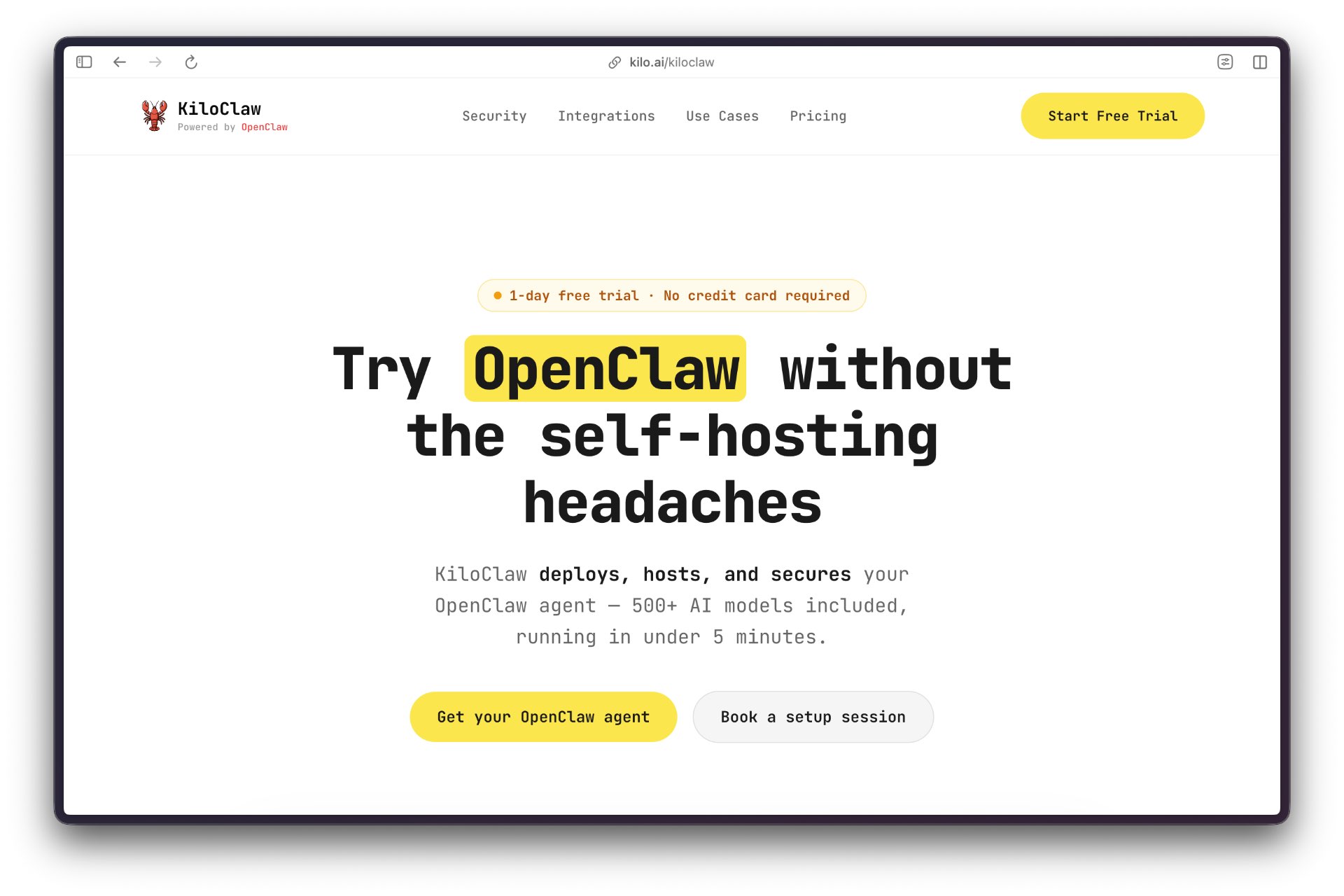
Kilo Code and KiloClaw represent two complementary layers in a unified AI coding platform built around open-source foundations and multi-model flexibility. Kilo Code is an open-source AI coding agent that runs inside VS Code, JetBrains IDEs, and as a command-line tool, with 18,900+ GitHub stars and more than 3 million developers in its ecosystem. KiloClaw is Kilo’s managed hosting service for OpenClaw — an autonomous agent framework — that provisions a production-ready AI agent in under five minutes without requiring SSH, Docker configuration, or server management.
These tools serve as alternatives to an increasingly crowded field of AI-assisted development platforms. The viable question for both is straightforward: does their combination of open-source transparency, multi-model access without markup, unified CLI architecture, and optional managed services deliver sufficient practical advantage over more established or specialized competitors? The answer depends almost entirely on what problem you’re actually solving.
Overview
💡 What Makes This Guide Different
Most AI tool documentation focuses on ideal scenarios. This guide is closer to an operator’s logbook: what installed cleanly, what broke, what got expensive, and what created real risk.
Kilo Code’s architecture centers on a CLI engine that powers multiple client surfaces — terminal, VS Code extension, and cloud services — all communicating over HTTP and Server-Sent Events. The CLI contains the AI agent runtime, tool execution, session management, and provider integrations. This design means that all surfaces share the same core behavior, and teams can switch between terminal, IDE, and cloud agent contexts without rebuilding agent logic.
The platform’s provider router connects to 500+ AI models from Anthropic, OpenAI, Google, OpenRouter, and other inference providers. Users can bring their own API keys (BYOK) or use pay-as-you-go managed inference through Kilo Gateway, with no token markup.
KiloClaw, built on the OpenClaw open-source agent framework (370,000+ GitHub stars, Apache 2.0 license), adds managed infrastructure on top: Firecracker VM isolation, AES-256 encrypted credential vaults, automated updates, and monitoring. It is to OpenClaw what Vercel is to Next.js — a managed hosting layer that handles the operational complexity.
| Product | Category | License | Starting Price | Core Differentiator |
|---|---|---|---|---|
| Kilo Code (extension) | IDE coding agent | MIT (core) | Free | Multi-IDE, BYOK, 500+ models |
| KiloClaw | Managed OpenClaw hosting | Proprietary service | $55/month | Zero-DevOps OpenClaw with Kilo ecosystem integration |
| GitHub Copilot | IDE inline completions | Proprietary | $10–19/user/month | Enterprise procurement, GitHub integration |
| Cursor | AI-native VS Code fork | Proprietary | $20/month | Tight editor integration, curated autocomplete |
| Claude Code | Terminal-first agent | Proprietary | Usage-based (API) | Terminal-centric, long-context reasoning |
| Augment Code | Enterprise AI coding | Proprietary | Enterprise pricing | Plans, approvals, delegation workflows |
What Kilo Code Actually Is
Kilo Code is an open-source AI coding platform with a layered architecture. The CLI engine runs as a standalone process. VS Code and JetBrains extensions, plus terminal and cloud interfaces, all communicate with this CLI over HTTP and SSE. This separation means the core agent runtime is independent of the UI layer — teams can build custom clients (Neovim plugins, web dashboards, CI scripts) that target the same engine without modifying it.
The platform supports multi-file editing with quick diffs, inline code generation, and model-agnostic provider routing. The bring-your-own-key model lets operators point the provider router at any inference API — Anthropic, OpenAI, Google, OpenRouter, local LLMs — or use Kilo Gateway for managed multi-model access at cost.
Enterprise features include shared MCP (Model Context Protocol) servers for governing tool access across organizations, prompt libraries with versioning and approval workflows, and SSO/SCIM provisioning in higher tiers.
What KiloClaw Actually Is
KiloClaw is a managed hosting service for OpenClaw. OpenClaw is a free, open-source autonomous AI agent that can read and write files, run shell commands, control browsers, and execute scheduled tasks — accessed through the chat applications you already use. The challenge is running OpenClaw reliably in production: configuring servers, managing updates, handling crashes, and securing access.
KiloClaw handles all of that. Each instance runs in an isolated Firecracker VM with five-layer tenant isolation, AES-256 encrypted credential vaults, agent-mediated shell access (no direct SSH), and daily encrypted backups. It includes Telegram, Slack, Discord, email, and calendar integrations out of the box, plus cron scheduling for time-triggered workflows.
Pricing: $55/month for the managed instance, plus inference costs through Kilo Gateway at 0% markup. A one-day free trial requires no credit card. The service also includes $10/month of Exa credits for web search and access to 610+ pre-built automation recipes (ClawBytes).
Pricing note: Some earlier third-party references cite $8/month for KiloClaw. The current official price is $55/month. Teams evaluating based on older sources should verify current pricing at kilo.ai/kiloclaw.
Key Similarities
Both products originate from the same team and share core infrastructure: Kilo Gateway for model routing, the Kilo CLI engine for agent execution, and Kilo Cloud services (Gas Town for containerized environments, Code Review, Auto Triage, Kilo Bot). Teams often use both products together — Kilo Code for IDE-based development workflows and KiloClaw for operational automation via chat platforms.
The target user profile overlaps substantially: engineering teams that prioritize open-source transparency, BYOK flexibility, and model choice over turnkey polish. Both products emphasize zero token markup on provider costs and minimal infrastructure overhead.
Privacy and security considerations apply equally to both. Because both products route inference through third-party providers and support BYOK, production-grade controls on permissions, secrets management, and chat-channel access are required for both. Minimize secrets in prompts. Review Kilo’s data handling policies. Use provider-side enterprise privacy settings when available.
Key Differences
The core divergence is interface paradigm and use case:
Kilo Code is IDE-native. It focuses on quick diffs, inline edits, and multi-file operations inside VS Code or JetBrains. It is optimized for synchronous, interactive development where a developer is actively working on code.
KiloClaw is asynchronous and persistent. It runs 24/7 on managed infrastructure, responds to chat commands, and executes scheduled workflows on cron schedules. It is optimized for tasks that should happen without an open IDE session — nightly builds, scheduled audits, repository monitoring, automated research.
Cursor vs. Kilo Code: Cursor trades model flexibility for deep editor integration. Users cannot modify autocomplete behavior, model routing, or context retrieval logic — community extensions work within Cursor’s constraints. Kilo Code’s open architecture allows community-built integrations that target the CLI engine directly. If model flexibility matters more than polish, Kilo Code has the advantage. If tight autocomplete with a curated provider set matters more, Cursor does.
Claude Code vs. Kilo Code: Claude Code is terminal-first, optimized for “pair engineer” depth on larger systems with longer-context reasoning. It targets developers who prefer command-line workflows and Anthropic’s Claude models. Kilo Code is IDE-native with terminal support. For large-system architectural work, Claude Code’s terminal-centric design has practical advantages. For teams that live in VS Code or JetBrains, Kilo Code’s IDE integration reduces context-switching.
GitHub Copilot vs. Kilo Code: Copilot offers enterprise procurement maturity, Microsoft-backed governance, and GitHub ecosystem integration. Its API surface is narrow — autocomplete and chat — but integration with GitHub’s code review and security scanning creates workflow lock-in. Licensing is per-seat. No BYOK option. For regulated industries or organizations that require audited, certified tooling from an established enterprise vendor, Copilot’s maturity is a genuine advantage.
Augment Code vs. Kilo Code: Augment Code provides formal plans, approvals, and delegation as first-class features. This governance-first model appeals to large engineering organizations where compliance and traceability requirements outweigh developer velocity. Kilo Code does not offer equivalent governance controls.
Managed OpenClaw Hosting Landscape
KiloClaw competes in a fragmented managed OpenClaw market. The KiloClaw alternatives page lists dozens of options:
| Provider | Price | Token Markup | Notable Features |
|---|---|---|---|
| KiloClaw | $55/month | 0% on 500+ models | Firecracker VM isolation, 610+ recipes, SOC 2 in progress |
| MyClaw | $16/month | ~10% discount | Lower cost; no independent security audit published |
| ZeroClaw Cloud | Free–$99/month | BYOK | Free tier; limited compute |
| OpenClaw Cloud | $39.90–$89.90/month | BYOK | Reference implementation; fewer Kilo integrations |
| Self-hosted (Hostinger VPS) | From $6.99/month + config | BYOK only | Full control; hours of setup; manual updates |
KiloClaw’s premium reflects the Kilo ecosystem integration (Kilo Gateway, ClawBytes, Kilo CLI), enterprise security controls, and first-party support. Teams with technical capacity and cost sensitivity may find self-hosted options or lower-cost providers viable — the trade-off is the DevOps overhead and lack of Kilo ecosystem features.
Embedded and CI/CD Context
Kilo Code’s CLI engine runs locally, making it tractable for headless environments, Docker containers, and CI runners. Teams run it in GitHub Actions and GitLab CI on standard 2 vCPU / 4 GB runners. The CLI’s provider router supports BYOK configurations pointing to on-premises LLM endpoints for air-gapped deployments. Kilo Code does not include native model quantization or on-device inference; it assumes network access to an inference provider.
KiloClaw inverts this model: the agent runs on Kilo’s managed infrastructure, and clients trigger it via chat platforms or webhooks. This eliminates client-side resource requirements but creates hard dependencies on persistent internet connectivity and Kilo Cloud availability. Teams operating in air-gapped networks, regulated environments with strict data residency requirements, or real-time contexts requiring sub-second responses will find KiloClaw’s hosted model disqualifying.
Security Posture
Kilo Code’s MIT license provides source-level transparency. The CLI engine can be audited, forked, and customized. BYOK configurations keep API keys and inference traffic within the operator’s perimeter — essential for air-gapped deployments or jurisdictions with data-localization rules.
KiloClaw’s architecture: each instance runs in an isolated Firecracker VM with five-layer tenant isolation, AES-256 encrypted storage, TLS in transit, and agent-mediated shell access only (no direct SSH). Kilo states it does not train on customer data. A SOC 2 whitepaper is referenced in the comparison materials; operators in compliance-sensitive environments should request the current attestation status directly from Kilo.
Neither Kilo Code nor the managed OpenClaw hosting ecosystem currently publishes third-party audit reports comparable to GitHub Enterprise or GitLab Ultimate. Organizations with HIPAA, SOC 2, or GDPR requirements should conduct their own due diligence and request Data Processing Agreements.
Migration and Adoption
For teams moving from GitHub Copilot or Cline, Kilo Code’s BYOK model and MIT license make initial evaluation low-friction: install the VS Code extension, configure provider keys, and test on non-critical work. The CLI-centric architecture enables gradual adoption alongside existing tools rather than forcing an immediate cutover.
Teams considering KiloClaw should use the one-day free trial to validate that their specific use case (chat-platform automation, scheduled tasks, persistent agents) works as expected before committing to $55/month. Pay attention to how the agent handles your actual workflows, not just demo scenarios.
Organizational change management matters. Developers accustomed to traditional workflows may resist agentic tooling. Shared prompt libraries and structured onboarding programs help build institutional knowledge faster than ad hoc experimentation.
Known Limitations
Kilo Code does not offer enterprise-grade governance frameworks comparable to Augment Code or GitHub Copilot. Inline autocomplete polish does not match Cursor. For terminal-centric work on large systems with long-context reasoning requirements, Claude Code has practical advantages.
KiloClaw’s iOS app for managing Cloud Agents was waitlist-only as of mid-2026; no Android equivalent was announced. The $55/month base price is the highest in the managed OpenClaw market. Explicit approval requirements for agent actions can interrupt autonomous workflows. Spending on runaway agent loops is not budget-capped by default — monitor token consumption.
Token cost transparency is an ongoing issue across the ecosystem. KiloClaw advertises 0% markup on 500+ models via Kilo Gateway, but teams must still monitor usage across chat platforms and scheduled tasks. No managed OpenClaw service currently provides usage anomaly detection, per-project cost allocation, or automated budget caps at the level standard in cloud infrastructure platforms.
Decision Framework
Adopt Kilo Code when you need: Multi-IDE support (VS Code, JetBrains, terminal), model flexibility without vendor lock-in, BYOK pricing for cost control, and IDE-native quick diffs as the primary workflow. Free to start; evaluate with minimal risk.
Adopt KiloClaw when you need: Persistent chat-platform agents (Telegram, Discord, Slack), scheduled automation without managing servers, and the Kilo ecosystem’s 610+ pre-built recipes. Use the one-day trial to validate fit before committing.
Neither solution fits teams requiring: Enterprise compliance certifications for regulated industries, air-gapped deployment models, formal approval and delegation workflows, or full audit trails for every agent action.
Operator Verdict
Kilo Code and KiloClaw are viable for their target use cases. The open-source foundation, multi-model flexibility, and IDE-agnostic architecture give Kilo Code genuine advantages for teams that prioritize model choice and transparency over editor polish. The platform’s 3M+ developer ecosystem and active development cadence indicate sustained investment.
KiloClaw solves a real problem: OpenClaw is powerful but operationally demanding to self-host. The managed service handles the complexity at a price that reflects the ecosystem integration it provides. Teams that need persistent agents without DevOps overhead and can accept the hosted model’s data handling trade-offs will find KiloClaw the most practical path.
The ecosystem’s primary weakness is governance maturity. Against well-funded commercial rivals — GitHub Copilot with Microsoft’s enterprise distribution, Cursor with its refined editor experience, Augment Code with enterprise approval workflows — Kilo’s competitive advantage is openness and flexibility. That advantage is real for teams where those attributes matter. For teams where enterprise controls, procurement maturity, or compliance certifications are the primary selection criteria, the alternatives remain stronger.