Perplexity Computer Put an EV Trip at Risk
⚠️ ALERT: A $200 Agent Failed an EV Safety Test
In one documented Denver-to-Las Vegas planning session for a 2026 Hyundai Ioniq 5, Perplexity Computer made up completely false mapping data that would have left our navigation system spinning. It supplied incorrect or invented charging details, omitted the route’s mountain constraints, misstated the time-zone transition, and continued to repeat a false Grand Junction station detail after correction. Perplexity later acknowledged in the thread that the Grand Junction detail was fabricated.
Using the roughly 210-mile real-world highway range we used for this Ioniq 5 test, trying to cover the proposed 150-mile stretch through the I-70 mountain corridor was a recipe for disaster. The plan failed to account for elevation, grades, conditions, or a defensible reserve before directing the vehicle into its most demanding leg.
Perplexity Max costs $200 a month. Our company test found that an agent at that price could invent a charger address, lose track of distance or time, and fail to incorporate vehicle and route constraints. It cannot be the sole authority for an EV trip through sparse and high-elevation terrain.
Verdict: Avoid / not recommended. Codex and Claude Code are better agent choices for our project work. Use a dedicated EV route planner with the exact vehicle, starting charge, charging-network access, and reserve target configured; then verify every critical stop in the charging network’s live app before departing.
We now have extensive operating experience with Perplexity Computer, and serious failures accumulated until this briefing required an update.
The Denver-to-Las Vegas EV trip is the clearest example. Perplexity made up false mapping data: charger identities and addresses that did not hold up, route arithmetic that did not add up, and a time-zone claim that was plainly wrong. A false Grand Junction station detail returned after correction. That is how a polished travel plan becomes dangerous: a driver follows it into terrain where the next actual charging option, the arrival reserve, and the clock all matter.
The dangerous answer was not a wild hallucination about an abstract topic. It was a plausible itinerary for a real electric-vehicle trip: Denver to Las Vegas through the Rockies and Utah desert. A plan can look organized, name a charging network, and still fail the moment its locations, arithmetic, or constraints stop matching the road.
Our test produced that failure pattern. The itinerary contained incorrect charging-station details, a distance total that did not match its own segments, a false claim that no time zone changed, and a route treatment that did not account for the practical consequence of crossing the Continental Divide and Vail Pass. When we corrected one of the station details, the false information returned.
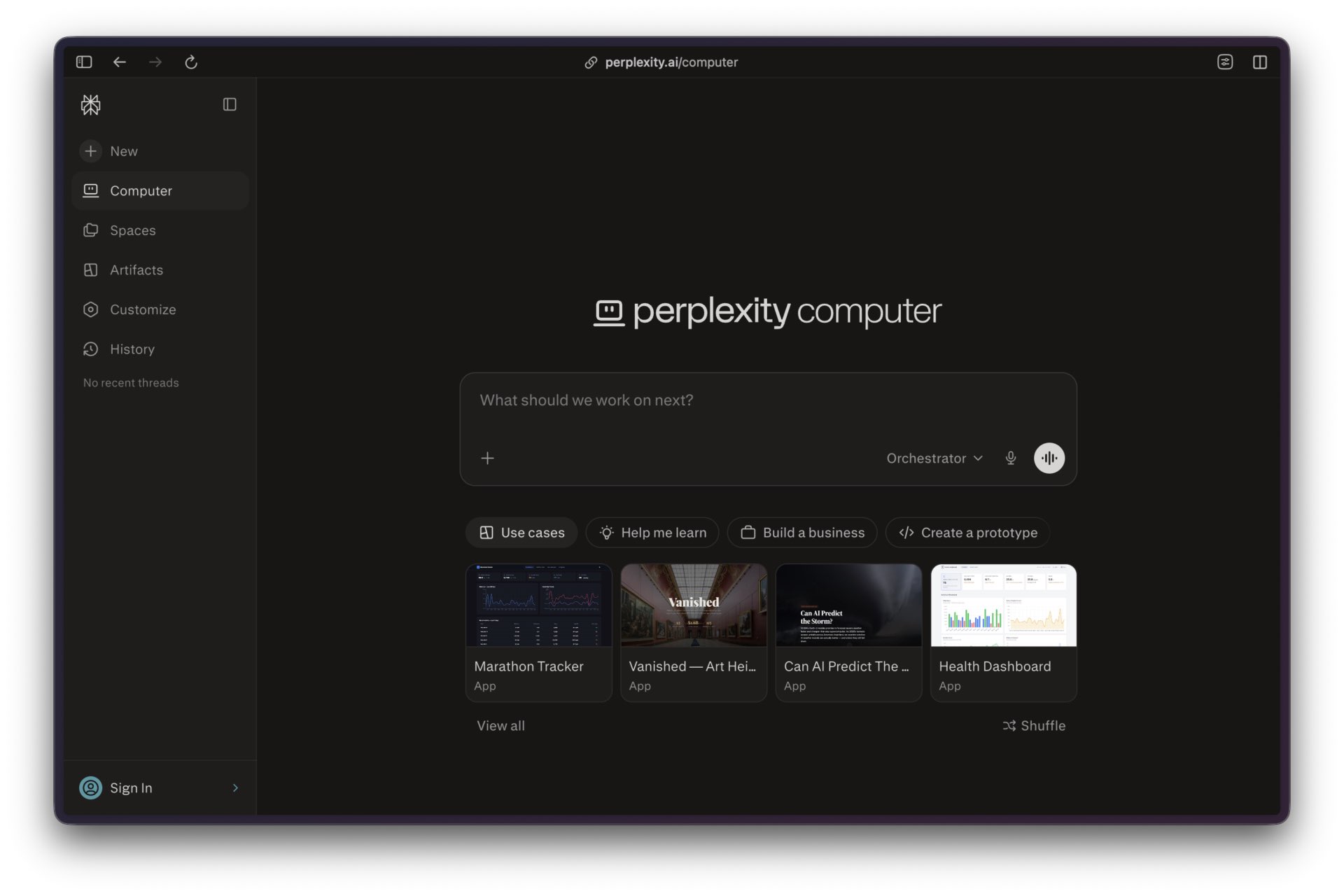
Perplexity Computer presents itself as a general-purpose digital worker that can create and execute workflows across real software interfaces, files, browsers, integrations, and subagents. That is a serious operating promise. Travel planning is where the promise meets physical constraints: a nonexistent charger, a missed elevation issue, or a wrong reservation assumption is not a typo. It can leave a driver without a viable next move. Perplexity’s launch announcement describes that broad agent role; this review evaluates one documented operator test against it.
The Test
We asked Perplexity Computer to plan a May 2026 road trip from Denver to Las Vegas for a new 2026 Hyundai Ioniq 5. The route covered roughly 760 miles through the Rockies and Utah desert, with charging coverage and mobile service becoming less forgiving outside the main corridor.
The test did not require obscure engineering knowledge. It required operational discipline: select real stations, add the segments correctly, recognize the Mountain-to-Pacific time change, use the vehicle’s actual configuration, and flag what needs confirmation before a driver commits to the next leg.
Hyundai’s published 2026 Ioniq 5 range is not one number. It runs from 245 to 318 EPA-estimated miles by trim and drivetrain, and Hyundai expressly says actual range varies with vehicle configuration, driving conditions, temperature, battery condition, and driving habits. That alone should rule out a casual range assumption in a mountain itinerary. Hyundai’s range guidance is clear on both the trim spread and the limits of the estimate.
Where the Plan Broke
The failure was cumulative. One questionable address might be caught before departure. A chain of bad locations, omitted terrain, incorrect timing, and repeated errors turns a plan into a liability.
| Failure | Evidence category | What the record supports |
|---|---|---|
| Grand Junction station identity and address | Operator transcript; independently verified location context | The plan called the stop a Walmart on North Avenue. The recorded response later admitted that detail was fabricated. Sam’s Club independently confirms its Grand Junction location at 1040 Independent Ave, the location identified in the correction. This verifies the location context, not an Electrify America charger’s live status. |
| Green River charging address | Operator transcript; network location page | The plan supplied 1865 E Main St. Electrify America’s current locator confirms a Green River location but did not expose a readable street address in the retrievable page. The claimed street-address error remains transcript evidence pending an archived station record. |
| Glenwood Springs charging address | First-party operator record | The plan supplied a Walmart address that our record identifies as incorrect. The review does not represent the trip-date charger address as a current external fact. |
| Salina stop | Operator transcript | A placeholder was presented as a usable charge stop without a street address. The failure is documented in the interaction; no claim about current station availability is made here. |
| Vehicle range | Official vehicle source; operator transcript | Hyundai publishes trim-specific EPA estimates and says actual range varies. Our test used a roughly 210-mile real-world highway operating range for this Ioniq 5; the plan’s generic figure above 260 miles was not a safe basis for the mountain itinerary. |
| Mountain route constraints | Official road source; operator transcript | CDOT places the Eisenhower–Johnson Memorial Tunnel near 11,112 feet and documents steep I-70 approaches, including Vail Pass. The plan did not surface those constraints before proposing a 150-mile I-70 mountain leg. We do not claim a universal percentage penalty. |
| Distance and time arithmetic | Operator transcript; independent time-zone verification | The displayed Day 2 total was about 360 miles while its segments totaled about 420 miles. The plan also said no time-zone change occurred; Las Vegas observes Pacific time while Utah observes Mountain time. |
| Hotel, app, and cancellation advice | Operator transcript; vendor-policy boundary | The plan omitted the ChargePoint app while recommending ChargePoint-equipped hotels, did not establish hotel charging until prompted, and repeated an unverified Booking.com cancellation statement. A booking policy must be taken from the reservation’s own terms and confirmation, not generalized. |
| Repeated false detail after correction | Operator transcript and Perplexity response in thread | After an accuracy correction, the false Grand Junction station detail reappeared. Perplexity’s response in the recorded thread explicitly acknowledged that the original detail was fabricated. |
Geography Is a Constraint, Not Decoration
The Denver-to-Glenwood Springs leg crosses the Continental Divide. The Eisenhower–Johnson Memorial Tunnel is about 60 miles west of Denver at an average elevation of 11,112 feet. CDOT’s mountain-pass reference lists the Eisenhower approaches at a six percent westbound grade and Vail Pass at 10,666 feet with a seven percent grade. CDOT’s route context does not quantify a universal EV range penalty, and neither do we.
That does not make elevation optional. A serious EV plan must model the selected vehicle, starting state of charge, speed, weather, route profile, charging-network access, and arrival reserve. A generic EPA figure cannot substitute for that work. The safety issue here is not that the agent failed to predict an exact battery percentage; it failed to identify a high-consequence constraint that should have triggered a more conservative plan and a verification step.
The time-zone mistake is simpler and equally revealing. Utah is on Mountain time; Las Vegas is on Pacific time. An itinerary that crosses into Nevada and says there is no change can misstate arrival, check-in, charging, and reservation timing. That is basic trip arithmetic, not a disputed judgment. Nevada’s time-zone reference identifies Las Vegas as Pacific time.
The Specialist-Tool Boundary
General agents are useful for research, options, prose, and trip brainstorming. They are a poor final authority for a charging-dependent route unless their recommendations are checked against tools that model the vehicle and the route.
A Better Routeplanner is an appropriate specialist category for this job because its published product description says it adapts planning to the vehicle, calculates charging stops, and accounts for charge behavior, temperature, accessories, and mountain passes. That is not a guarantee that every route is correct. It is a better operating boundary: use an EV-specific route plan to establish the charge sequence, then verify each stop in the operator’s live network app.
For ChargePoint stops, the company’s own driver materials say its app can locate stations, show station details, and start charging. The ChargePoint mobile-app tour supports including the app in a trip’s required-tool list when a plan relies on that network. Hotel chargers need their own confirmation from the property, not a planning agent’s summary.
Safe Operating Workflow
- Set the vehicle configuration – Enter the exact model, drivetrain, battery state, plug access, and desired arrival reserve in an EV-specific planner.
- Model the hard leg – Inspect the route through mountain passes, weather exposure, distance between viable fast chargers, and a fallback stop before committing to the first charge.
- Verify every critical stop – Open each network’s live app and confirm location, connector compatibility, operating status, and access conditions on the day of travel.
- Check the clock and booking terms – Confirm time-zone changes, hotel charging, check-in, and cancellation terms from the reservation confirmation and the property, not a generalized answer.
- Keep an alternative – Carry a second charge option and enough reserve to reach it. If the plan depends on one unverified station, it is not a plan.
What the Test Establishes
This test establishes that Perplexity Computer fabricated operational mapping data, failed basic route arithmetic, ignored a known high-elevation constraint, and recycled a fabricated station detail after correction. The Grand Junction fabrication was acknowledged in the recorded thread. Those are not cosmetic defects. They can send a driver toward a nonexistent or misidentified charger with too little range, time, or reserve to recover safely.
The 150-mile I-70 corridor is the clearest illustration. With the roughly 210-mile real-world highway range used for our Ioniq 5 test, the proposed leg left too little margin for elevation, weather, speed, detours, charger availability, and the reserve required for a failed stop. Perplexity did not surface that exposure. It presented a route that looked navigable while stripping out the information that makes it navigable.
That is enough to reject Perplexity Computer as a final authority for EV travel, medical logistics, emergency routing, or any task where fabricated operational details can create a physical safety problem.
Operator Verdict
Avoid / not recommended. At $200 a month, Perplexity Computer’s managed convenience does not survive the reliability gap documented in our company test. A real road plan requires real stations, real constraints, correct arithmetic, and a system that does not recycle a fabricated location after correction.
Use Codex or Claude Code for agentic project work, where changed files, commands, and checks can be inspected. For EV travel, use a vehicle-aware route planner, confirm every essential charger in the live network app, and treat the reservation confirmation as the source for booking rules.
Resources
- Perplexity Computer launch announcement – Official product-positioning reference.
- Hyundai Ioniq 5 specifications – Trim-specific EPA range and conditions context.
- A Better Routeplanner – Vehicle-aware route-planning reference.
- Julian Goldie SEO: NEW Perplexity Computer AI Agent is INSANE! – Independent hands-on overview of Perplexity Computer’s marketed workflow.